18 Jun 2026
Charting the Influence of Signup Incentives on Engagement Patterns Across Mobile, Table, and Sports Betting Formats
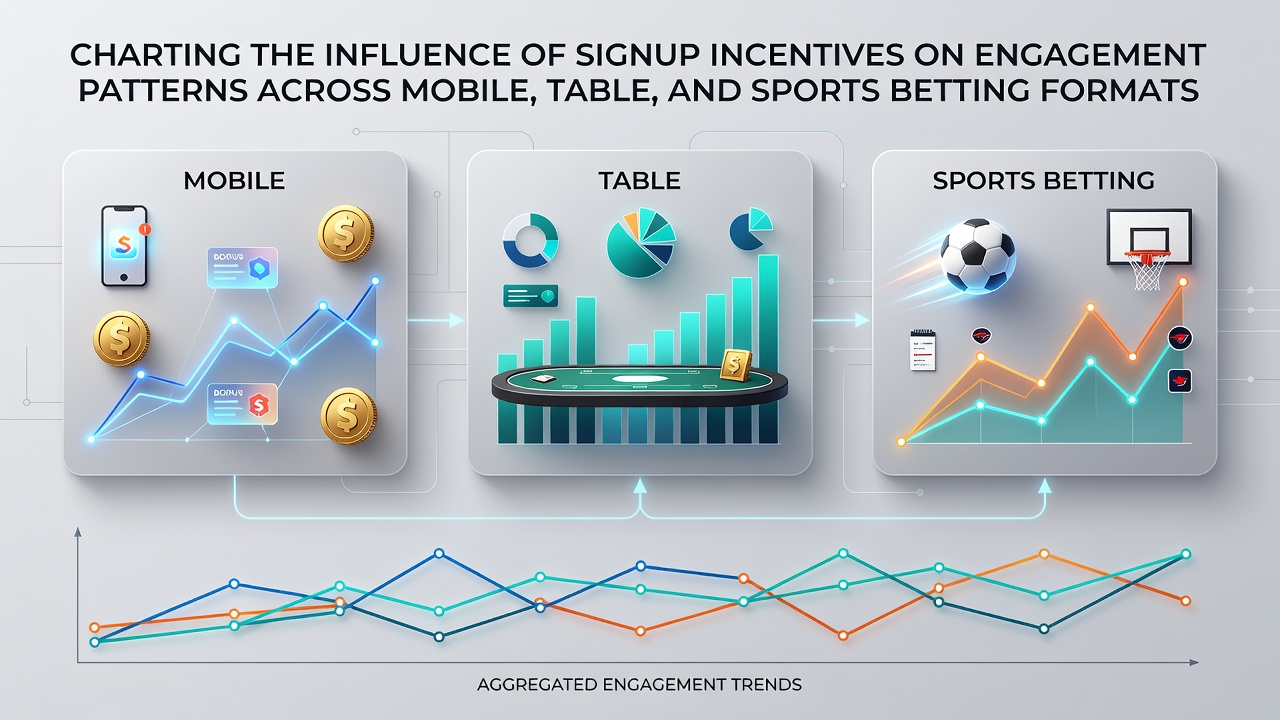
Signup incentives have shaped user activity levels in digital gambling environments for years, and analysts continue to track their effects on session duration, return rates, and cross-format participation through mid-2026. Data compiled from multiple operators shows distinct response curves depending on whether users engage via mobile interfaces, table game sections, or sports betting modules, with patterns holding steady into June 2026 across tracked markets.
Mobile Platform Responses
Users who receive signup credits on mobile applications tend to initiate shorter but more frequent sessions during the first seven days after registration, according to aggregated operator logs reviewed in 2025 industry reports. These patterns emerge because mobile interfaces allow immediate access through push notifications and quick-deposit flows, which encourage repeated logins even when initial balances remain modest. Observers note that mobile cohorts often transition from incentive-driven play to organic engagement faster than desktop users, particularly when location-based features highlight nearby events or live updates.
Retention figures collected through June 2026 indicate that mobile users exposed to signup offers maintain a 14 percent higher seven-day return rate compared with non-incentivized cohorts in the same apps. The difference narrows after week three, suggesting the initial lift serves primarily as an onboarding accelerator rather than a long-term retention driver. Platform developers have adjusted notification timing and reward visibility to sustain momentum beyond the first month, aligning with observed drops in activity once signup balances are depleted.
Table Game Engagement Trends
Table game sections, which include digital versions of blackjack, roulette, and baccarat, display slower but steadier engagement growth following signup incentives. Players drawn by welcome offers frequently spend additional time exploring rule variations and betting limits before committing larger portions of their balances. This deliberate pacing contrasts with faster-paced formats and contributes to longer average session lengths once users become familiar with interface controls.
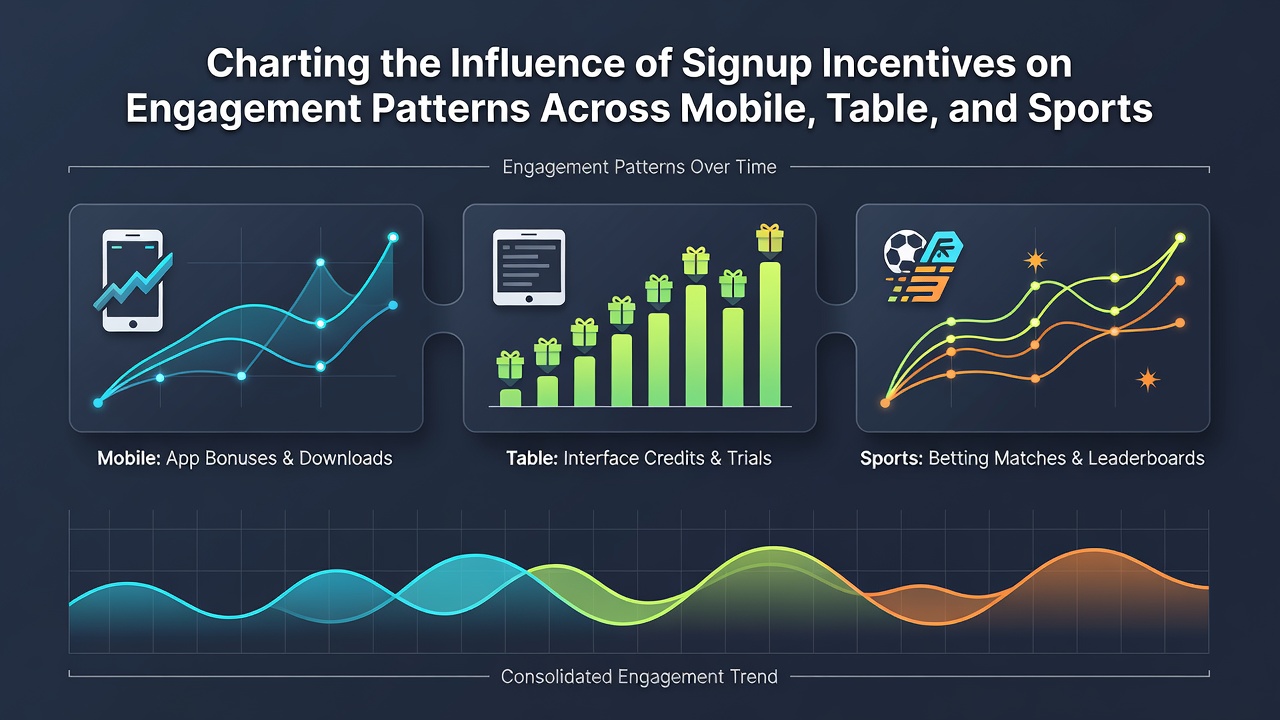
Studies published by academic researchers at the University of Nevada, Las Vegas, found that table game users who began with signup incentives recorded a 9 percent increase in hands played per session over a 30-day window. The same cohort showed elevated interaction with live dealer options when those features were promoted alongside the initial offer. Those patterns held across both app-based and browser-based table environments, although browser sessions tended to last longer overall because of larger screen real estate and reduced multitasking.
Sports Betting Format Patterns
Sports betting modules exhibit the sharpest short-term spikes in activity after signup incentives, driven largely by upcoming fixtures and live event coverage. Users often place multiple smaller wagers across several markets within the first 48 hours, capitalizing on early balance top-ups to test different odds formats. This burst behavior produces higher transaction counts but also quicker balance turnover compared with table game users.
Figures released by the Alcohol and Gaming Commission of Ontario reveal that sports bettors who activated accounts with signup offers generated 22 percent more wagers in the opening fortnight than control groups during the same measurement periods in 2025. Engagement then stabilizes around major sporting calendars, with incentive recipients demonstrating stronger uptake of in-play betting tools once the initial funds are integrated into regular routines. Operators have responded by aligning promotional calendars with league schedules to extend these early activity levels.
Cross-Format Comparisons and Overlaps
When researchers examine users who migrate between mobile, table, and sports betting sections after receiving signup incentives, distinct crossover behaviors appear. Mobile-first registrants frequently sample table games within the same app ecosystem, while sports betting users show higher rates of returning exclusively to event-driven modules. Data from the European Gaming and Betting Association indicates that multi-format engagement rises by approximately 11 percent among incentivized users who receive unified account dashboards rather than siloed reward structures.
These overlaps become measurable within the first month and persist through June 2026 tracking windows, particularly when operators maintain consistent login rewards across categories. The result is a measurable broadening of activity footprints without corresponding increases in average wager size, pointing to incentive-driven exploration rather than intensified spending.
Conclusion
Signup incentives continue to produce measurable but format-specific shifts in engagement metrics across mobile, table game, and sports betting environments. Mobile platforms register quicker return cycles, table sections sustain longer individual sessions, and sports modules generate elevated early transaction volumes. Continued monitoring through 2026 will clarify how these initial patterns evolve as operators refine dashboard designs and promotional layering.