Notification Networks: How Push Alerts Coordinate Tiered Rewards Across Mobile Live Tables, Card Rooms, and Sports Markets
Jordan Foster · Aug 24, 2026
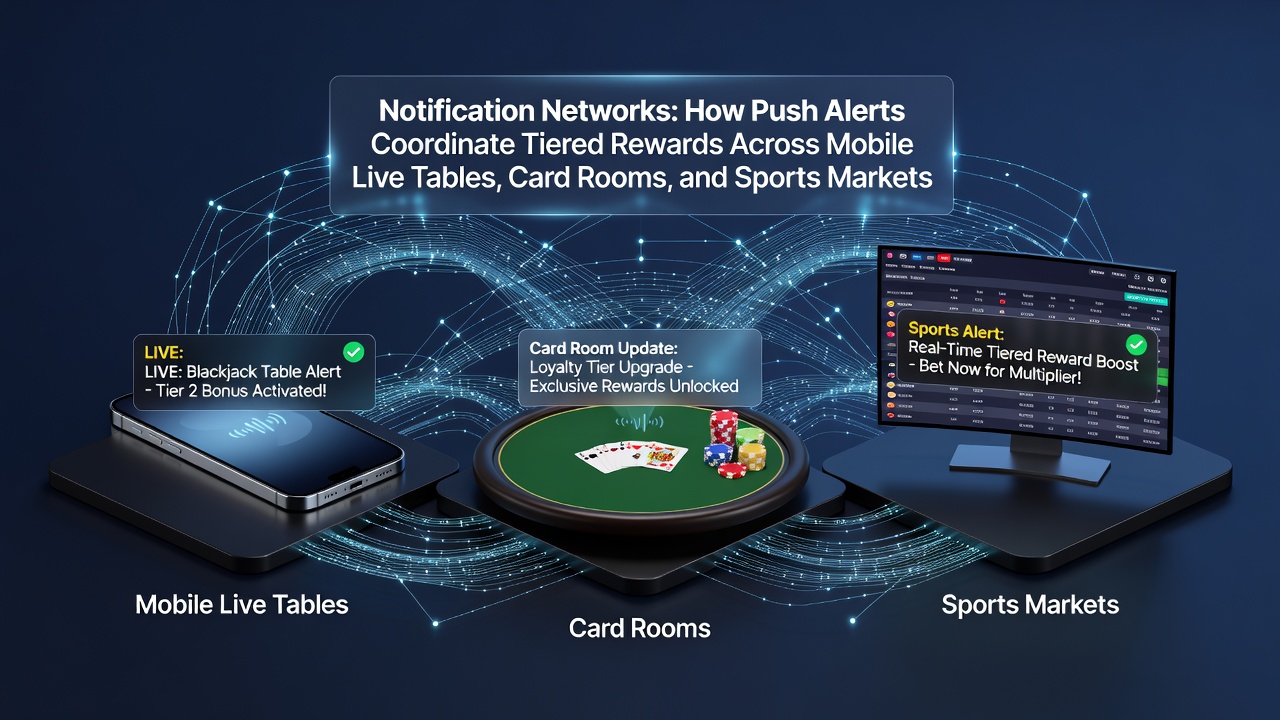
Notification Networks: How Push Alerts Coordinate Tiered Rewards Across Mobile Live Tables, Card Rooms, and Sports Markets
Push notification systems now serve as central coordinators for tiered reward structures in mobile gambling environments, and they connect activity across live dealer tables, poker rooms, and sports betting platforms through automated alert sequences. Data from regulatory filings shows that operators deploy these networks to trigger reward escalations based on real-time user engagement metrics, while integrated APIs ensure that a single alert can unlock layered incentives without manual intervention from players or staff.
Mechanics of Alert Coordination in Mobile Live Tables
Live table environments rely on push alerts to synchronize reward tiers with session data, and alerts fire when players reach thresholds such as hand counts or table time, which then activate bonus credits that appear instantly on the mobile interface. According to information published by the New Jersey Division of Gaming Enforcement, these systems track participation across multiple tables simultaneously, and the resulting notifications direct users toward higher reward brackets by displaying personalized progress updates that link directly to active promotions.
Operators configure alert timing to align with peak activity periods, and this approach allows rewards to cascade from initial sign-up incentives into ongoing loyalty multipliers while maintaining compliance with jurisdictional payout rules. Research conducted by the University of Nevada Reno indicates that notification latency under two seconds improves retention rates in live dealer settings, and developers achieve this speed through edge computing nodes positioned near major data centers.
Integration Across Card Rooms and Poker Networks
Card room platforms use the same notification backbone to manage poker-specific reward ladders, and alerts inform players of satellite tournament entries or rakeback adjustments once they accumulate sufficient hands or tournament points. Systems route these messages through unified player accounts so that progress in one card room format immediately influences eligibility in others, creating a continuous reward pathway that spans cash games and scheduled events.
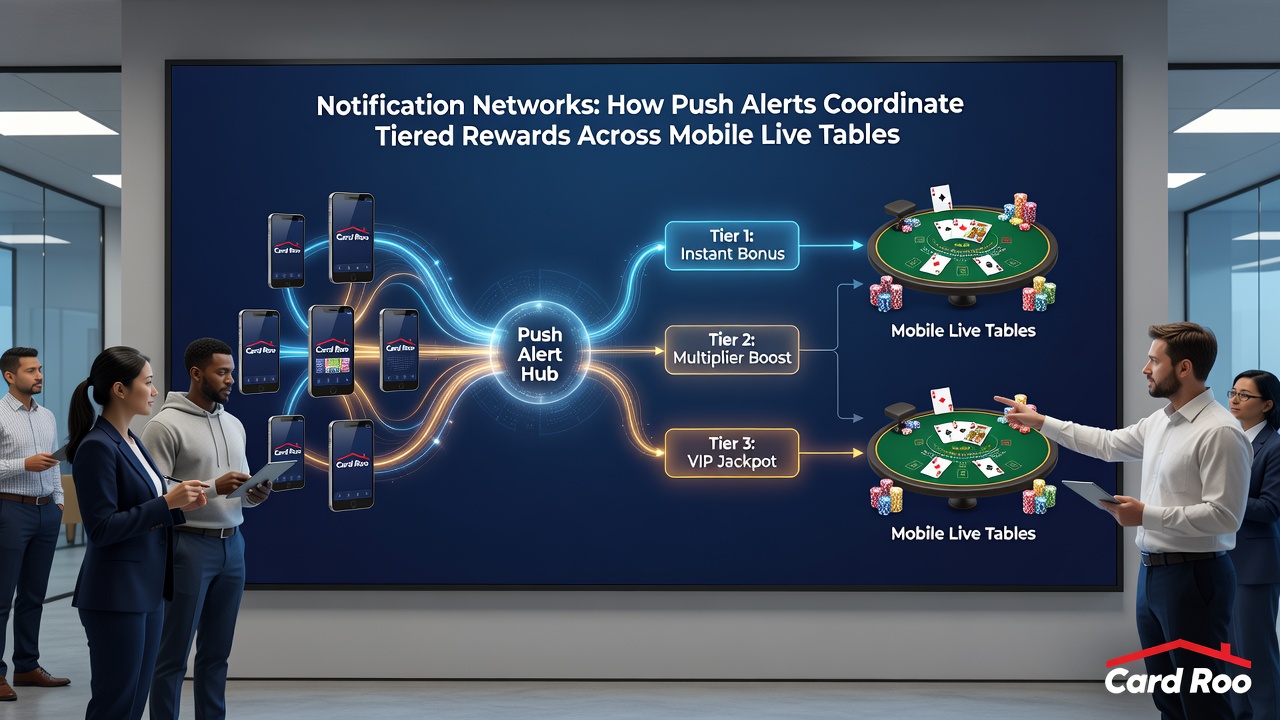
Push notifications also coordinate multi-table bonuses by sending tier advancement confirmations that unlock seat reservations or fee discounts, and backend databases log each alert to prevent duplicate rewards across sessions. Observers note that this coordination reduces administrative overhead because one alert can reference multiple data points from poker tracking software without requiring separate player actions.
Cross-Market Synchronization with Sports Betting
Sports markets incorporate push alerts into their reward frameworks by linking betting volume and outcome accuracy to tier upgrades that carry over into casino and poker environments, and notifications appear after settlement of wagers to confirm new status levels. These alerts reference aggregated data from both pre-match and in-play markets, which enables operators to deliver rewards that reflect performance across different product verticals within a single account.
As of August 2026, several major platforms have expanded alert parameters to include live odds movements and parlay completions, and the resulting messages guide users toward combined promotions that span sports and table games. Industry reports from the American Gaming Association detail how these cross-market alerts maintain separate compliance logs for each jurisdiction while presenting unified reward progress to the end user.
Data Flow and Technical Architecture
Notification networks operate through centralized event buses that ingest signals from mobile apps, web portals, and backend game servers, and each signal passes through rule engines that determine reward eligibility before dispatching the alert. Redundant queuing systems ensure delivery even during high-traffic periods such as major sporting events or tournament finales, and logging protocols record every push for audit purposes required by regulatory bodies.
Encryption standards protect user preference data within these networks, and operators segment alert categories so that players receive only opted-in messages while still achieving full visibility into their current tier status across live tables, card rooms, and sports markets. Technical documentation from platform providers shows that average daily alert volumes exceed several million messages during peak months, with delivery success rates above 98 percent in monitored deployments.
Conclusion
Push alert coordination continues to evolve as operators refine rule sets and expand data inputs from additional game types, and the resulting networks maintain consistent reward delivery across mobile live tables, card rooms, and sports markets through automated, auditable processes. Regulatory oversight from multiple jurisdictions ensures that these systems operate within established boundaries while supporting the technical infrastructure needed for real-time tier management.